Sintered silicon nitride (Si3N4) and sialon ceramics often possess colour variations which can occur within the same batch, as a gradient through a cross section, or amongst parts sintered in the same sintering cycle.
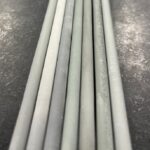

Sintered silicon nitride (Si3N4) and sialon ceramics often possess colour variations which can occur within the same batch, as a gradient through a cross section, or amongst parts sintered in the same sintering cycle.

At International Syalons Ltd, each of our silicon nitride-based ceramic grades are manufactured onsite from high purity raw materials, and every batch is rigorously analysed using various testing methods, ensuring we continue to produce high quality engineering components.
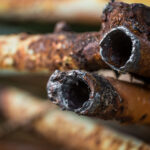
Chemical resistant equipment sits at the centre of some of the industry’s most aggressive operating conditions. Acids, alkalis, abrasive particles, and extreme heat continuously degrade pumps, seals, valves, and reactor components. Under these combined stresses, conventional materials such as stainless steel, carbon steel, polytetrafluoroethylene (PTFE), and engineered polymers can corrode, fatigue, or contaminate processing systems like reactors, pumps, and chemical transport lines. Advanced ceramics have emerged as a durable alternative because they resist chemical attack while maintaining strength, wear resistance, and thermal stability.

Technical ceramics routinely withstand temperatures, corrosive media, and abrasive conditions that would quickly compromise metallic components in demanding industrial sectors such as aluminium casting, glass manufacturing, chemical processing, and power generation. Their reliability, however, depends heavily on how stress develops within the material during service. Because ceramics lack the ductility of metals, they cannot absorb overloads through deformation. Repeated thermal cycling, uneven load distribution, or rapid temperature changes can gradually generate internal stresses that initiate ceramic cracking, often resulting in sudden and costly component failure. Preventing ceramic cracking necessitates careful control of component geometry, operating conditions, and material selection throughout the entire service life of the ceramic system.
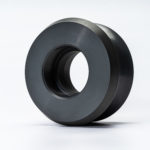
Abrasion acts as a continuous force that gradually reshapes material surfaces and compromises system accuracy in a variety of industrial processes, including bulk material handling, automotive manufacturing, powder conveying, pneumatic conveying, and metal forming. What begins as minor wear can evolve into significant operational disruption, causing issues like dimensional drift, reduced efficiency, material contamination, and increased maintenance frequency.
Addressing abrasion effectively requires selecting materials based on their mechanical and chemical performance instead of relying on hardness alone. Abrasion-resistant wear parts must combine resistance to surface penetration with the ability to withstand stress and environmental exposure. Advanced ceramic materials from International Syalons are engineered to deliver such a balance, maintaining performance in environments defined by sustained abrasion and mechanical stress.
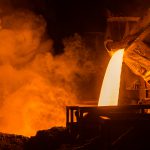
Industrial components rarely experience chemical exposure, mechanical stress, or thermal load in isolation. In most operating environments, these forces act together, shaping how materials degrade and how industrial systems fail. Corrosive media accelerate wear mechanisms, abrasion exposes chemically reactive surfaces, and temperature variation accelerates both processes. The challenge for engineers lies not in addressing any one stress, but in selecting materials that remain stable under hybrid loads, where multiple degradation mechanisms act simultaneously. Corrosion-resistant ceramics, particularly ceramic-based ‘alloy’ systems, offer robust performance in response to hybrid loads when their chemical resistance, mechanical strength, and thermal stability are aligned with the combined service demands.

Careful consideration must be given to the materials that are employed in chlorine-rich environments, as chlorine gas (Cl₂), chloride vapours, and molten chloride salts behave very differently from more familiar corrosive species. Even materials known for their excellent chemical resistance in industrial settings can respond unpredictably once temperatures rise. This contrast becomes especially clear when comparing graphite with advanced technical ceramics, which undergo markedly different chemical and structural changes when exposed to chlorine.
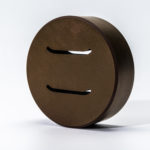
Cross-contamination poses a constant challenge to industries where purity and consistency are critical, such as food processing, pharmaceutical packaging, polymer extrusion, and medical device manufacturing. Residues, microbial growth, or wear particles from one production run can compromise the next, risking product quality, regulatory compliance, and costly downtime. Because cross-contamination often stems from the condition of the tooling, attention naturally turns to the forming dies used in many hygiene-critical processes. Their precision and surface integrity determine the level of clean, reliable operation that can be sustained between production runs.
A range of industrial processes depend on chlorine for their effective operation, including chemical synthesis, water treatment, polymer production, and metal refining. However, its extreme reactivity poses significant challenges for long-term safety and material reliability. When chlorine combines with moisture or heat, it produces hydrochloric and hypochlorous acids that corrode even high-performance metals and polymers. This aggressive behaviour generates harsh operating environments where corrosion can lead to leakage, contamination, and costly equipment failure. Choosing the right chemical-resistant materials for chlorine-based industrial conditions is therefore vital to ensure process safety, reliability, and long-term performance.
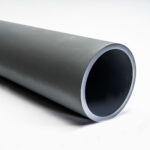
Cleanliness, consistency, and regulatory compliance are key standards in the food industry, serving as non-negotiable requirements that must be met to minimise contamination risks, ensure efficient operations, and protect product integrity. From the machinery that processes food to the packaging that preserves it, food and beverage manufacturers require materials that are hygienic, durable, and thermally stable. One of these materials is aluminium, a metal valued for its versatility, corrosion resistance, and thermal performance, qualities that are harnessed through casting to produce food-grade components with precision and reliability.
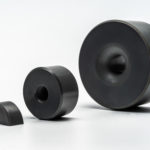
Producing structural components, such as aluminium window and door frames, copper pipe and wiring, and roof structures requires manufacturing methods that deliver high dimensional accuracy and surface integrity. One such technique for shaping structural components is extrusion, and at the heart of the extrusion process is the die. Manufacturers use ceramic extrusion dies to produce precise, repeatable profiles that retain their accuracy and surface quality over long production runs, even when processing highly abrasive or chemically aggressive feedstocks. Their wear and corrosion resistance, dimensional and thermal stability, and smooth surface finish make them particularly valuable for generating structural components that must maintain exact geometry, defect-free surfaces, and consistent performance under demanding service conditions.