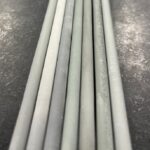
Key performance metrics to look for in erosion-resistant materials

There is no single property that tells an engineer how well a material will resist erosion. Hardness is important when abrasive particles cut or slide across a surface, but other properties become just as vital if those particles strike at high velocity, temperatures fluctuate, or corrosive media enter the process. Different damage mechanisms expose distinct material weaknesses. Consequently, erosion resistance is better assessed across several performance characteristics, with fracture toughness, thermal shock resistance, chemical stability, microstructural quality, and surface finish all contributing useful information.
Continue reading

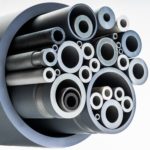
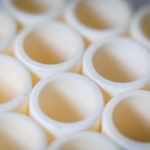
alumina tubes

Understanding oxide-ceramic stresses in engineering materials

Rapid heating and cooling can place substantial stress on technical ceramics long before their maximum service temperature is reached. Uneven heat distribution produces thermal gradients, causing regions of a component to expand or contract at differing rates. For engineering materials such as alumina and zirconia, the resulting oxide-ceramic stresses can increase susceptibility to thermal shock. Silicon nitride and Sialon respond differently, making their thermomechanical properties a crucial comparison for ceramic components exposed to repeated thermal cycling and intensive high-temperature industrial service.

Continue reading

A Brief Guide to Fatigue Corrosion of Materials

Microscopic damage can become a significant engineering problem when a technical ceramic faces thousands or millions of loading cycles in a corrosive environment. Repeated stress encourages existing flaws to propagate, and chemical species can further weaken vulnerable regions around an advancing crack. Temperature fluctuations may also add thermal stresses that accelerate crack propagation. Known as fatigue corrosion, this interaction can influence the durability of ceramic valves, pump seals, extrusion tooling, and molten-metal components operating under combinations of mechanical, thermal, and chemical strain during service.

Continue reading

How do engineering materials hold up to mechanical creep?

The service life of many industrial components is governed by their ability to resist gradual deformation rather than sudden failure. Mechanical creep becomes increasingly significant as operating temperatures rise, placing significant demands on the atomic structure of engineering materials. Materials capable of limiting atomic movement, such as advanced ceramics, retain their geometry far longer under continuous mechanical loading.

Continue reading

Preventing liquid metal adhesion with advanced ceramics

Liquid metal adhesion is governed by complex interactions between molten alloys and the surfaces they encounter. During high-temperature manufacturing, favourable surface chemistry can cause molten aluminium, zinc, steel, and copper alloys to wet, spread, and bond with tooling, leading to contamination, dimensional change, and costly maintenance. Preventing these interactions is accomplished with materials possessing exceptional chemical stability and low wettability. Advanced sialon ceramics provide a stable, chemically inert contact surface, helping manufacturers maintain cleaner processes and more consistent production over extended operating periods.

Continue reading

How materials selection can help with industrial maintenance cost savings

The true cost of a component is rarely determined by its purchase price. Over time, repeated replacements, production downtime, and emergency maintenance can have a more significant impact on operating costs than the component itself. Advanced technical ceramics offer a practical way to reduce these expenses by resisting the wear, corrosion, and thermal shock that commonly cause premature component failure, enabling equipment to operate reliably for longer.

Continue reading

Preventing fissures and cracks in welding pins and tooling components

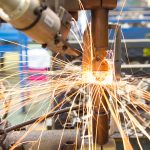
Heat, pressure, and cyclic loading produce an unforgiving environment for welding pins and tooling components. With every production cycle, thermal gradients and mechanical forces place stress on the material, encouraging microscopic fissures to form and extend into larger cracks. The outcome often results in premature component failure and, therefore, production interruptions and rising operating costs. Advanced sialon ceramics are specifically engineered to resist these failure mechanisms, helping manufacturers achieve longer service life and greater process reliability.

Continue reading

Overcoming cross-contamination challenges in industry

Cross-contamination is one of the most persistent challenges facing modern industry. It threatens product quality, operational efficiency, and regulatory compliance across a range of manufacturing environments, including pharmaceutical plants, food processing facilities, chemical production lines, and biotechnology operations. While attention often focuses on cleaning procedures and process controls to overcome cross-contamination, equipment materials themselves can be a hidden source of contaminants. Advanced ceramics provide an effective defence against these risks.

Continue reading

Negating the causes of corrosion with resistant ceramic alloys

A material’s true value is measured not by how it performs on day one, but by how effectively it withstands years of service. In industries where equipment operates continuously under harsh process conditions, premature material failure can lead to costly downtime, increased maintenance requirements, and reduced operational efficiency. Selecting materials capable of maintaining long-term performance has therefore become a critical consideration for engineers and manufacturers alike. Corrosion-resistant ceramic alloys have emerged as a robust solution for applications where conventional materials, including stainless steels and nickel-based alloys, can struggle to maintain performance under severe chemical, thermal, and mechanical loading. Their ability to address multiple forms of degradation within a single material system has made them increasingly useful in demanding industrial environments.

Continue reading