
A range of industrial processes depend on chlorine for their effective operation, including chemical synthesis, water treatment, polymer production, and metal refining. However, its extreme reactivity poses significant challenges for long-term safety and material reliability. When chlorine combines with moisture or heat, it produces hydrochloric and hypochlorous acids that corrode even high-performance metals and polymers. This aggressive behaviour generates harsh operating environments where corrosion can lead to leakage, contamination, and costly equipment failure. Choosing the right chemical-resistant materials for chlorine-based industrial conditions is therefore vital to ensure process safety, reliability, and long-term performance.
Why Chlorine Is So Aggressive
Chlorine’s corrosive behaviour is due to several concurrent mechanisms that act on metals and polymers:
- Oxidising attack: Chlorine strips away protective oxide films, leaving exposed surfaces vulnerable to further reaction.
- Acid formation: Moisture turns chlorine into hydrochloric and hypochlorous acids, both highly corrosive to metals and coatings.
- Chloride-ion damage: Chloride ions penetrate microcracks, leading to localised pitting and stress corrosion cracking.
- Temperature and pressure effects: Elevated temperature and pressure intensify chlorine’s chemical activity, accelerating corrosion and mechanical degradation.
- Polymer deterioration: Chlorine radicals diffuse into polymers, causing swelling, embrittlement, or permeation failure.
Any material selected for chlorine-based industrial conditions must endure not only chlorine’s corrosive chemistry but also the combined effects of heat, pressure, and mechanical stress. Only certain advanced, chemical-resistant materials possess the structural integrity and corrosive stability needed to operate reliably under such harsh industrial conditions.
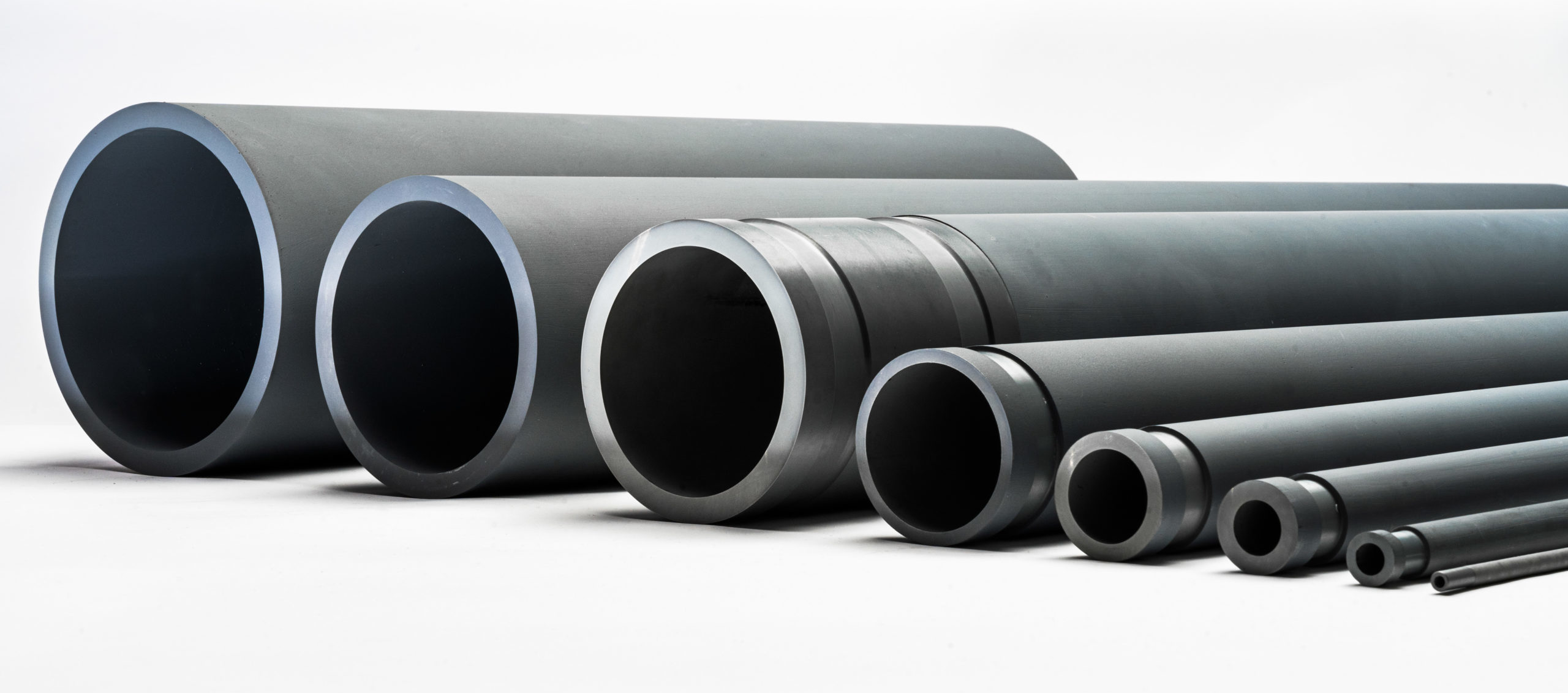
Sialon Tubes – Image Credit: International Syalons (Newcastle) Ltd.
A Structured Approach to Selecting Chemical-Resistant Materials for Chlorine-Based Industrial Conditions
Define the environment
Begin by identifying the form of chlorine within the process environment, whether it is present as a gas, liquid, or dissolved compound. Determine its concentration, operating temperature, and potential impurities such as water vapour, acids, or oxidants. Each of these variables governs how chlorine reacts with different materials, shaping the dominant corrosion mechanisms and long-term material performance.
Match chemistry to chemistry
It is important to match the chemistry of the chosen material to the chemistry of chlorine and its derivatives because compatibility at the molecular level determines how effectively a material resists corrosion and degradation. Choose chemical-resistant materials with proven stability against chlorine, hydrochloric acid, and hypochlorous acid under comparable operating conditions. Make sure to also review corrosion data, compatibility charts, and test results to confirm reliable operation in chlorine-based industrial environments.
Assess mechanical and thermal performance
Evaluate the mechanical strength and thermal stability of each candidate material alongside its chemical resistance. It must be capable of withstanding pressure, vibration, and temperature cycling without losing shape or integrity.
Consider fabrication and inspection
The selected material’s response to fabrication processes, such as welding, joining, or lining, should be reviewed, as these can alter its corrosion resistance in chlorine-based industrial conditions. Chemical-resistant materials that maintain chemical stability through fabrication and allow for effective inspection are better suited for long-term reliability.
Validate through testing
Conduct exposure or pilot testing of chemical-resistant materials under representative chlorine-based industrial conditions to verify long-term behaviour. This step confirms both chemical stability and mechanical durability.
Comparing Common Chemical-Resistant Materials
Metals and Alloys
Stainless steels (304, 316, and duplex grades) provide only moderate chlorine resistance when exposed to chlorine-based industrial conditions. Nickel-based alloys like Hastelloy and Inconel perform better but are expensive. Titanium and tantalum offer excellent protection but are rarely practical for large-scale use in applications that demand high corrosion resistance to chlorine-based environments.
Polymers and Composites
Fluoropolymers like polytetrafluoroethylene (PTFE) and perfluoroalkoxy alkane (PFA) are chemically inert and provide excellent resistance to chlorine-based environments, but their mechanical strength and temperature tolerance are limited. Fibre-refined plastics (FRPs) can be formulated to withstand chlorine exposure more effectively, but their long-term performance depends strongly on resin composition, fibre type, and manufacturing quality.
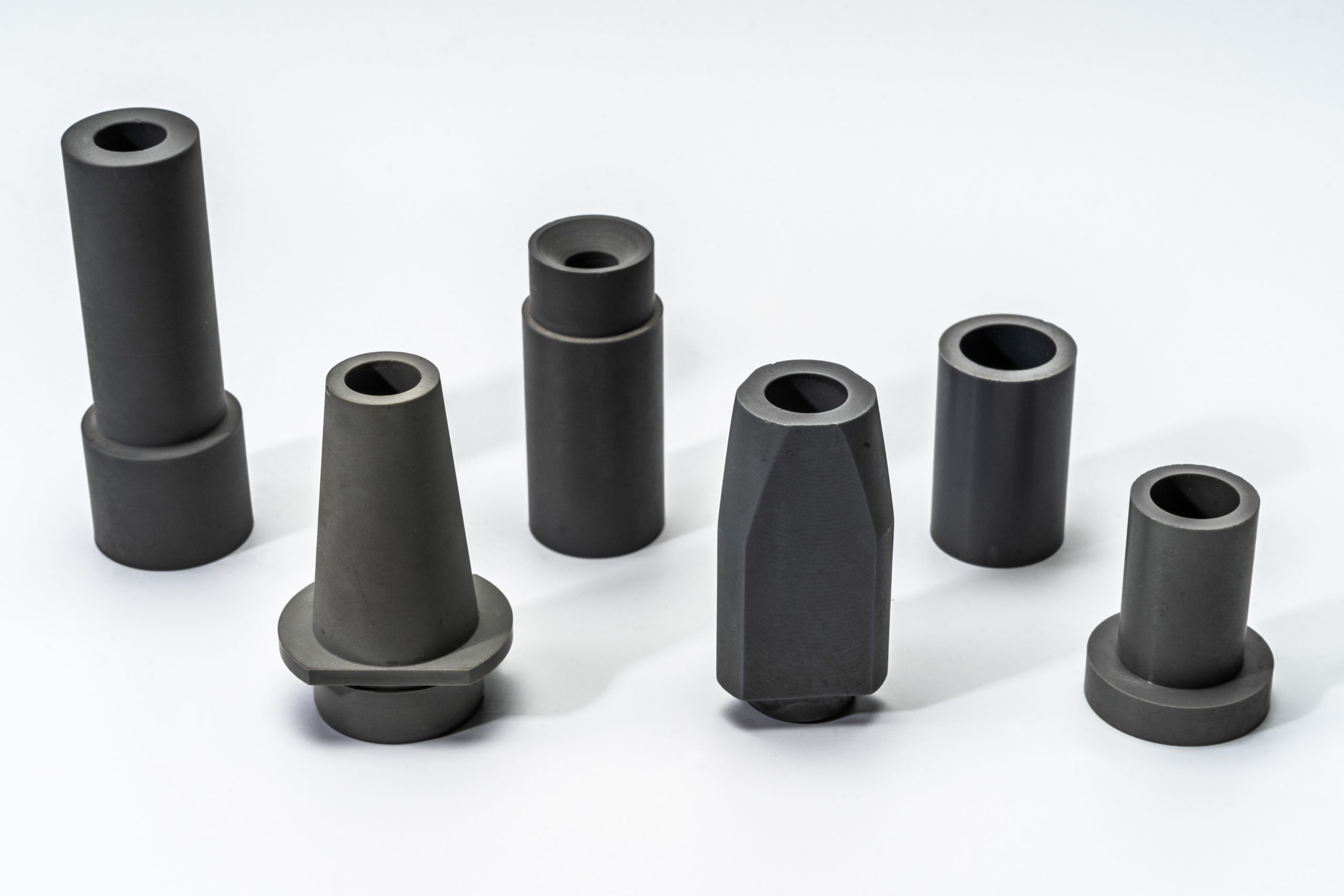
Silicon nitride nozzles. Image Credit: International Syalons (Newcastle) Ltd.
The Case for Advanced Ceramics
When industrial systems operate under chlorine-based industrial conditions, few chemical-resistant materials can match the performance of advanced ceramics such as silicon nitride, sialons, and zirconia. Advanced ceramics combine exceptional chemical inertness with high strength and thermal stability, offering a level of reliability that metals and polymers struggle to achieve.
The stability of advanced ceramics arises from a dense, non-porous microstructure that prevents chlorine and other oxidising species from penetrating or reacting with the material. Unlike metals, ceramics do not depend on a passive oxide layer for protection. Their resistance is inherent, meaning they remain unaffected by pitting, crevice corrosion, or chloride-induced cracking even after long-term exposure to harsh chemical environments.
At elevated temperatures, advanced ceramics retain their mechanical integrity where other materials soften or degrade. They resist oxidation, thermal shock, and permeation while maintaining dimensional accuracy through repeated heating and cooling. Moreover, their low thermal expansion helps prevent mechanical stress, ensuring consistent performance under both static and high-flow conditions.
Because of these combined advantages, advanced ceramics have become the preferred material for injectors, valves, thermocouple sheaths, and flow tubes used in chlorine-handling systems. They provide long-term stability and reduce the risk of chemical contamination in chlorine-based industrial environments.
Ensuring Long-Term Reliability with Chemical-Resistant Materials
The right chemical-resistant material can make all the difference to safe and consistent operation in chlorine-based industrial conditions. International Syalons develops advanced ceramic materials engineered for harsh chemical environments. Syalon 101, a silicon-nitride-based ceramic, offers resistance to chlorine and acid corrosion while maintaining high strength and dimensional stability. Syalon 050 provides enhanced hardness and wear resistance, making it suitable for abrasive and high-temperature conditions. Zircalon 10, a yttria-stabilised zirconia, combines chemical inertness with impact toughness, ideal for chlorine-rich atmospheres involving mechanical stress. These materials extend equipment life, reduce maintenance costs, and improve process safety in chlorine-based industrial environments. Reach out to International Sylons today to learn more about how our chemical-resistant ceramics can strengthen your operations.