Careful consideration must be given to the materials that are employed in chlorine-rich environments, as chlorine gas (Cl₂), chloride vapours, and molten chloride salts behave very differently from more familiar corrosive species. Even materials known for their excellent chemical resistance in industrial settings can respond unpredictably once temperatures rise. This contrast becomes especially clear when comparing graphite with advanced technical ceramics, which undergo markedly different chemical and structural changes when exposed to chlorine.
Understanding Chlorine Corrosion in High-Temperature Environments
Chlorine is uniquely aggressive, capable of initiating both oxidation and chlorination reactions. At high temperatures, chlorine molecules and chloride ions remove atoms from a material’s surface and exploit any microstructural pathways to move deeper into the material. Moisture and oxygen can accelerate these reactions, and molten chloride salts can introduce rapid corrosion modes through forming direct contact with highly reactive ions. The result is an environment that challenges even robust structural materials and can cause accelerated material loss over time.
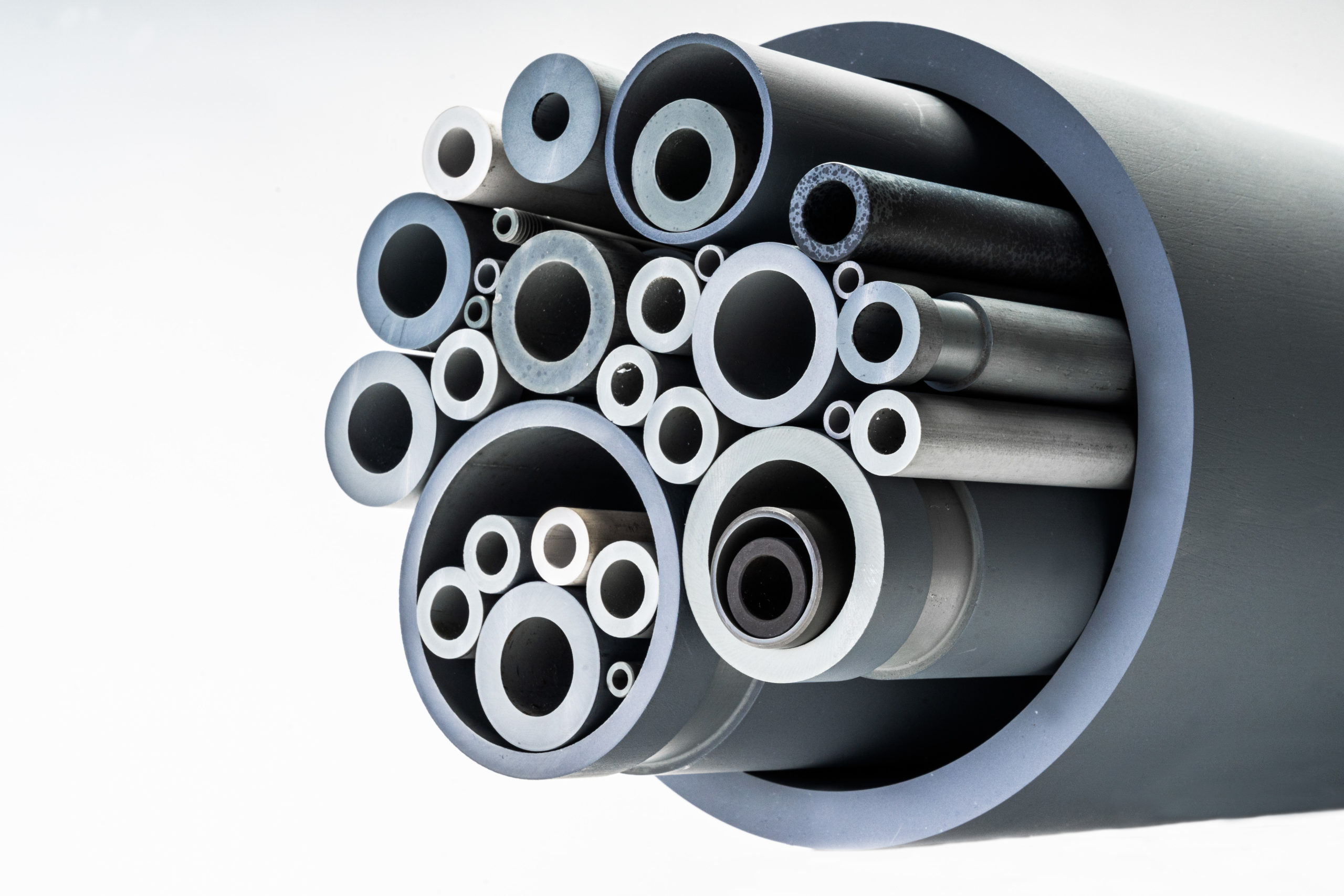
Silicon nitride thermocouple protection tubes. Image Credit: International Syalons (Newcastle) Ltd.
Chlorine Corrosion of Graphite: Why It Breaks Down Quickly
Graphite is widely used across industrial sectors like metallurgy, chemical processing, energy processing, and high-temperature manufacturing because of its high-temperature stability and general chemical inertness. Yet, despite graphite’s capabilities, it often provides little resistance in chlorine-containing environments at elevated temperatures, particularly where moisture or molten chloride salts are present.
How Chlorine Enters and Moves Through Graphite
The stacked-layer carbon structure found in graphite inevitably includes small pores and defects, even in dense, high-purity grades. Chlorine readily travels through these pathways and interacts with internal surfaces, initiating corrosion beneath the exterior. Consequently, graphite becomes especially vulnerable in chlorine-rich environments compared with most other corrosive settings, such as oxidising atmospheres, steam environments, or typical mineral acid processes.
What Chlorine Does to Graphite
Once inside, chlorine reacts with carbon, forming volatile carbon chlorides or oxidised carbon species that progressively remove material from the graphite lattice. Oxygen or water vapour can intensify this process by accelerating carbon oxidation. In molten chloride salt conditions, corrosion becomes even more aggressive, as mobile chloride ions penetrate pores and degrade the graphite internally rather than merely thinning the surface.
What This Means in Practice
Under chlorine exposure, graphite may erode gradually, wear unevenly, or fail internally as porous regions collapse. Even dense or purified grades can suffer significant mass loss over time unless they are protected by coatings or used in carefully controlled environments.
Chlorine Corrosion of Technical Ceramics: Why They Remain Stable
Technical ceramics, such as silicon nitride, silicon carbide, and zirconia, are chemical-resistant materials that behave very differently from graphite when exposed to chlorine. Their overall performance is far more robust, retaining their properties far more effectively due to their chemistry and dense, tightly bonded microstructures.
How Chlorine Interacts with Ceramic Materials
Chlorine interacts with technical ceramics in a very limited way because they possess strong covalent or ionic bonds and densely packed microstructures. Unlike the layered structure of graphite, technical ceramics offer few pathways for chlorine to move inward, meaning any reaction is largely confined to the outer surface rather than the bulk of the ceramic material. Ergo, the integrity of the ceramics remains largely unaffected under most service conditions.
Why Chlorine Has Little Effect on Most Ceramics
The atomic bonds of technical ceramics are extremely difficult for chlorine to break, meaning they rarely participate in the reactions that remove material from graphite. Chlorine molecules and chloride ions cannot easily disrupt the ceramic lattice, so corrosion develops slowly, even at high temperatures. This resistance helps technical ceramics maintain their structural and dimensional integrity during long-term chlorine exposure.
What This Means In Practice
Technical ceramics can keep their mechanical strength and resist chemical attack even when exposed to chlorine as a hot gas or molten salt. The stability of technical ceramics supports their use in chlorine bearing systems that require long, reliable service, such as molten salt crucibles, burner nozzles, and high-temperature gas distribution components.
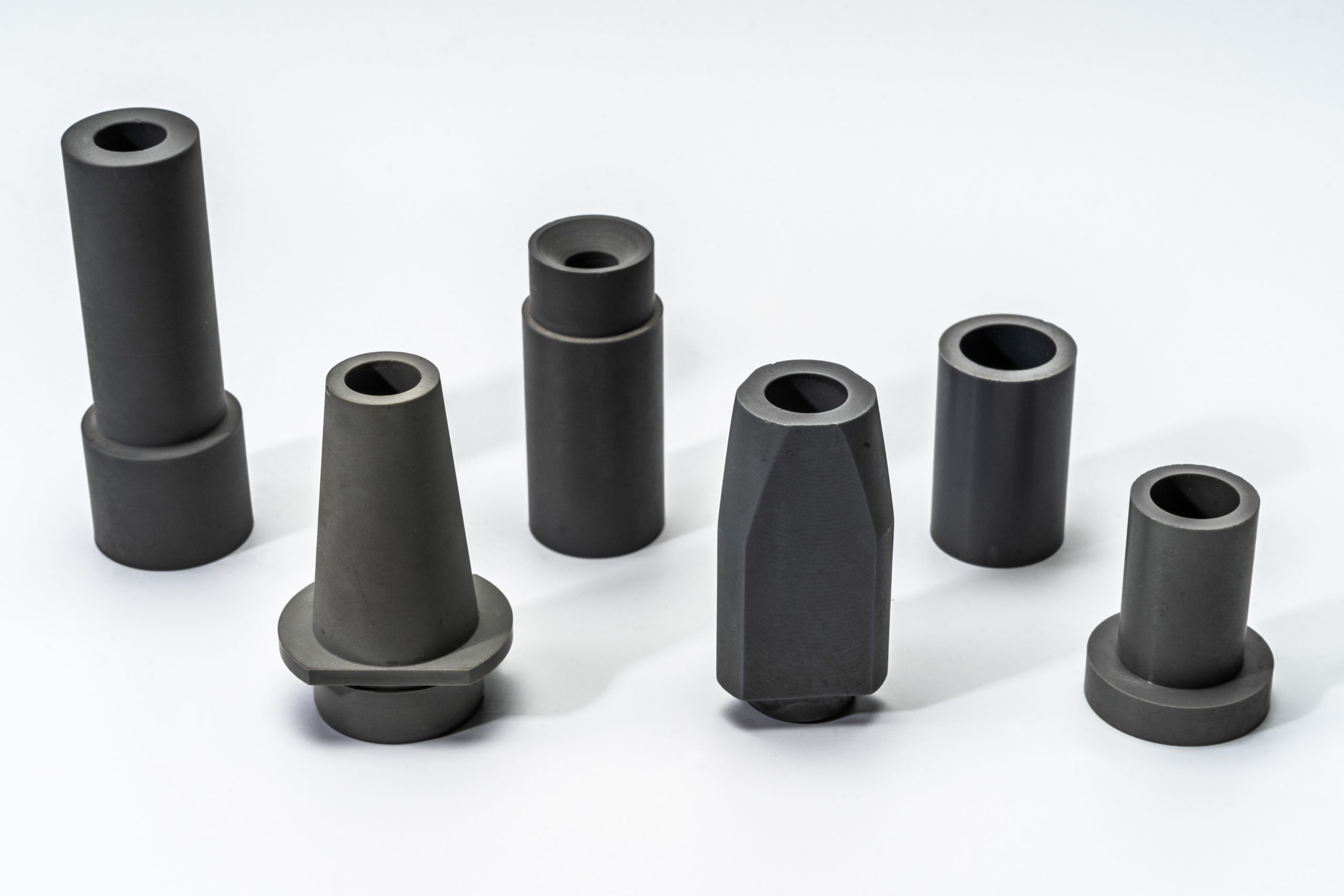
Silicon nitride nozzles. Image Credit: International Syalons (Newcastle) Ltd.
Comparing Graphite and Technical Ceramics in Chlorine Exposure
How Easily Chlorine Can Enter the Material
- Graphite- Chlorine passes through its pores and between its layers, reaching the interior quickly.
- Technical ceramics- Dense structures block the chlorine, ensuring any chlorination or oxidation reactions stay confined to the surface.
How the Material Reacts Chemically
- Graphite- Carbon readily undergoes chlorination and oxidation, driving the ongoing degradation of the material.
- Technical ceramics- Chemical reactions are minimal, and the surface remains largely unchanged.
Impact on Long-Term Performance
- Graphite- Progressive thinning, internal weakening, and premature failure are common in chlorine-rich conditions.
- Technical ceramics- Materials remain stable, strong, and dimensionally reliable, even after extended exposure.
Choosing Materials That Withstand Chlorine Corrosion
Chlorine-based environments expose the fundamental difference between graphite’s porous reactivity and the stability of technical ceramics. For applications involving hot chlorine gas, chloride vapours, or molten chloride salts, ceramic materials provide far more durable and predictable corrosion resistance than graphite, and so should be chosen for systems that require consistent performance under sustained chlorine exposure. International Syalons specialises in silicon nitride and sialon ceramics designed for these demanding conditions. Their corrosion resistance, high-temperature stability, and mechanical robustness make them well-suited to applications where chlorine exposure is unavoidable. For detailed technical information or help with selecting silicon nitride or sialon materials for chlorine-intensive applications, contact International Syalons today.