A material’s true value is measured not by how it performs on day one, but by how effectively it withstands years of service. In industries where equipment operates continuously under harsh process conditions, premature material failure can lead to costly downtime, increased maintenance requirements, and reduced operational efficiency. Selecting materials capable of maintaining long-term performance has therefore become a critical consideration for engineers and manufacturers alike. Corrosion-resistant ceramic alloys have emerged as a robust solution for applications where conventional materials, including stainless steels and nickel-based alloys, can struggle to maintain performance under severe chemical, thermal, and mechanical loading. Their ability to address multiple forms of degradation within a single material system has made them increasingly useful in demanding industrial environments.
The Problem of Hybrid Loading
Corrosion becomes significantly more destructive when chemical, thermal, and mechanical stresses occur simultaneously. This interaction, often referred to as hybrid loading, generates operating conditions that traditional metals, such as tool steels, cast irons, and corrosion-resistant alloys, struggle to survive over long periods.
Chemical attack weakens grain boundaries and destabilises protective oxide films. Mechanical abrasion then strips away those surface layers, exposing fresh material to aggressive media. Meanwhile, thermal fluctuations intensify the process further by forming microscopic cracks that allow corrosive gases and liquids to penetrate deeper into the substrate.
Even advanced metallic systems encounter limitations under such conditions. Stainless steels can experience pitting corrosion in aggressive chemical environments, while nickel-based alloys often degrade rapidly at elevated temperatures. Galvanic corrosion introduces additional instability when dissimilar metals operate together in conductive environments, leading to uneven corrosion rates and premature component degradation.
As process conditions become more severe, industries need materials capable of resisting multiple forms of degradation simultaneously. This is where corrosion-resistant ceramic alloys provide a measurable advantage.
What Are Corrosion-Resistant Ceramic Alloys?
SiAlONs, or Silicon Aluminium Oxynitride ceramics, draw upon the principles of ceramic engineering with alloy chemistry. The material originates from silicon nitride, but selected silicon and nitrogen atoms within the crystal lattice are replaced with aluminium and oxygen atoms. These changes at the atomic level produce a completely new structure with tailored mechanical and chemical properties.
In many ways, the principle is similar to traditional alloy development. Just as adding zinc to copper produces brass with altered characteristics, modifying silicon nitride lattice generates a corrosion-resistant ceramic alloy designed for hostile industrial environments.
Unlike coated metals, corrosion-resistant ceramic alloys have resistance incorporated throughout the entire component. A protective coating can crack or erode, exposing vulnerable substrate material underneath. In contrast, corrosion-resistant ceramic alloys maintain the same structural and chemical stability across the full component, even after prolonged wear or impact exposure. This consistency supports longer service life and more predictable maintenance schedules.
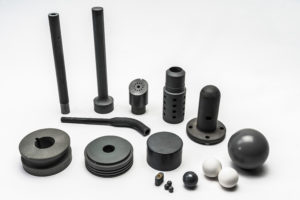
Silicon nitride components. Image Credit: International Syalons (Newcastle) Ltd.
Tailoring Materials to the Nature of the Attack
Each industrial environment exposes components to different dominant failure mechanisms. The key to selecting the most suitable corrosion-resistant ceramic alloy lies in understanding the conditions driving degradation within a particular application.
High Mechanical and Chemical Stress
Operations involving pumps, valves, and non-ferrous molten metal handling often combine sustained mechanical loading with aggressive chemical exposure. These environments require materials capable of resisting fracture while remaining chemically stable. Syalon 101, a fully dense beta-sialon corrosion-resistant ceramic alloy, was developed to resist such conditions. Its fracture toughness helps absorb mechanical stress and its chemical stability limits interaction with hostile process media. The outcome is improved component durability in pumps, valves, and non-ferrous molten metal handling systems exposed to sustained mechanical and chemical stress.
Particulate Erosion and Chemical Wear
Abrasive slurries and high-velocity particulates can rapidly erode conventional metals, causing dimensional instability and premature failure. Syalon 050 addresses this challenge through exceptional hardness and a tightly packed crystalline lattice structure. As an alpha-sialon corrosion-resistant ceramic alloy, it resists erosive thinning and maintains dimensional tolerances under continuous abrasive exposure, making it particularly valuable for industries where process precision remains critical, like pharmaceuticals and advanced manufacturing.
Elevated Temperatures and Corrosive Atmospheres
High-temperature environments generate additional challenges because oxidation and diffusion processes accelerate dramatically as temperatures rise. Syalon 201 has been engineered specifically for elevated-temperature applications involving corrosive gases and thermal loading. Depending on operating conditions, the material can function at temperatures approaching 1,350°C. Its microstructure limits grain-boundary phase diffusion, reducing the pathways oxygen and volatile gases use to degrade conventional ceramics. This improves long-term stability in furnaces, thermal processing systems, and chemically aggressive high-temperature operations.
Molten Metal and Thermal Shock
Molten metal handling exposes components to severe thermal shock, chemical attack, and mechanical stress simultaneously. Syalon 110 and Zircalon 10 are optimised for such demanding conditions. Syalon 110 performs effectively in steel casting applications, while Zircalon 10 utilises yttria-stabilised zirconia chemistry to withstand extreme thermal-mechanical loading. Both materials demonstrate non-wetting behaviour that minimises molten metal adhesion and reduces dross accumulation. Their resistance to thermal shock also lowers the risk of catastrophic cracking during repeated heating and cooling cycles.
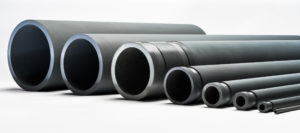
Sialon Tubes – Image Credit: International Syalons (Newcastle) Ltd.
Industrial Impact and Efficiency Gains
The transition from conventional metals and refractories to corrosion-resistant ceramic alloys can provide several operational advantages:
- Extended component service life in chemically, thermally, and mechanically demanding environments such as chemically aggressive processing plants
- Reduced maintenance requirements and fewer unplanned production interruptions
- Lower risk of contamination in applications where process purity must be preserved
- Greater stability under hybrid loading conditions
- More consistent performance throughout prolonged operating periods.
A Strategic Approach to Corrosion Resistance
Every operating environment presents unique challenges, which is why material selection should never rely on a one-size-fits-all approach. International Syalons offers a range of advanced corrosion-resistant ceramic alloys engineered for specific chemical, thermal, and mechanical demands. Whether the challenge is abrasion, corrosion, thermal shock, or a combination of all three, our team can help identify the optimum material solution. Reach out to us today for more information about our corrosion-resistant ceramic alloys.