Industrial components rarely experience chemical exposure, mechanical stress, or thermal load in isolation. In most operating environments, these forces act together, shaping how materials degrade and how industrial systems fail. Corrosive media accelerate wear mechanisms, abrasion exposes chemically reactive surfaces, and temperature variation accelerates both processes. The challenge for engineers lies not in addressing any one stress, but in selecting materials that remain stable under hybrid loads, where multiple degradation mechanisms act simultaneously. Corrosion-resistant ceramics, particularly ceramic-based ‘alloy’ systems, offer robust performance in response to hybrid loads when their chemical resistance, mechanical strength, and thermal stability are aligned with the combined service demands.
Understanding How Hybrid Loads Drive Failure
Hybrid loading environments shorten component life because each form of stress reinforces the next. Mechanical forces abrade surfaces, disrupt passive films, or introduce microcracks into the near-surface microstructure. Corrosive media then concentrate at these damaged sites, accelerating localised attack, while thermal cycling increases diffusion rates, reaction kinetics, and fatigue damage. As chemical attack, mechanical damage, and thermal effects overlap, material degradation becomes cumulative rather than incremental. Once abrasion, impact, or temperature fluctuation is introduced, surface films and microstructural barriers degrade or are repeatedly disrupted. In hybrid loading environments, durability is ultimately determined by how well a material resists the loss of protection in the presence of combined chemical, mechanical, and thermal stress, rather than by its corrosion resistance measured in isolation.
Advanced Ceramic Alloys as Corrosion-Resistant Systems
The behaviour of structural materials used in industrial components changes fundamentally when chemical exposure, mechanical stress, and temperature variation act together. Within hybrid loading regimes, component service life is often constrained not by the inherent strength of the base material, but by the failure of surface-based protection mechanisms that are vulnerable to wear, loading, and thermal fluctuation. Advanced ceramic alloys are developed specifically to avoid such a limitation. Their resistance is intrinsic to the material rather than dependent on coatings or passive films, allowing them to resist chemical attack, maintain stiffness under load, and retain structural integrity across wide temperature ranges. This makes advanced ceramic alloys the right choice for applications where combined chemical, mechanical, and thermal stresses define normal operating conditions rather than exceptional events, such as pumps, valves, melt-contact components, and reactor hardware operating in aggressive process environments.
Hybrid Loads in Industrial Environments
Hybrid loads typically combine two dominant stress mechanisms, with the third acting as an accelerating factor. Corrosion-resistant ceramic alloys are a good choice for industrial components operating under combined exposure, mechanical stress, and temperature fluctuations, offering a stable response to overlapping degradation mechanisms.
Chemical–Mechanical Environments: Erosion-Corrosion Control
Erosion-corrosion develops under chemical-mechanical hybrid loads, where material degradation is driven by the combined effects of wear and chemical attack rather than by either mechanism alone. Systems handling aggressive fluids, slurries, or suspended solids are especially exposed to chemical-mechanical hybrid loads that merge continuous abrasion with active chemical attack. Particulate impact and abrasion remove material from working surfaces, while corrosive media react with the newly exposed material, accelerating loss of component cross-section and reducing predictability of service life.
Syalon 101 is designed for chemical-mechanical hybrid loads where corrosive exposure coincides with sustained mechanical strength. Its strength and fracture resistance support reliable performance in pump components and valves through allowing the material to tolerate surface damage while corrosive media act on exposed areas, without triggering premature cracking or failure. When abrasive wear becomes the dominant contributor within a chemical-mechanical hybrid load, Syalon 050 provides a more suitable balance of properties. Its higher hardness reduces particulate-driven erosion, allowing components to retain dimensional stability even under conditions that would rapidly degrade conventional corrosion-resistant alloys.
Chemical–Thermal Environments: Stability at Elevated Temperature
Rising temperature places additional demands on materials already exposed to aggressive chemistry. As thermal energy increases, many corrosion-resistant metals, particularly austenitic stainless steels and nickel-based systems, experience accelerated oxidation, softening, or chemical interaction with molten materials. These effects accelerate material loss, destabilise surfaces, and promote adhesion or build-up, all of which can interfere with process control and component reliability.
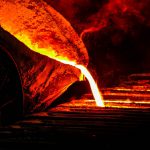
Syalon 110 is intended for direct contact with molten steel. It can resist chemical interaction and wetting, reducing adhesion and surface build-up that would otherwise disrupt casting and melt-contact operations. Meanwhile, Syalon 201 is used in applications combining aggressive chemistry with sustained high temperatures, such as furnace and kiln components, reactor internals, and high-temperature fixtures exposed to corrosive process atmospheres. This ceramic alloy can retain chemical stability and structural integrity during prolonged thermal exposure, maintaining reliable performance up to 1,350°C, beyond the temperature range at which many metallic materials, including austenitic stainless steels and nickel-based alloys, begin to degrade.
Mechanical–Thermal Environments: Impact and Thermal Shock
Mechanical-thermal hybrid loads occur when impact-vibration or constraint coincide with rapid temperature change. Thermal shock generates internal stresses that develop faster and reach higher levels than those caused by steady heating, increasing the risk of cracking if mechanical forces are also present.
Zircalon 10 can be utilised in mechanical-thermal environments where resistance to impact must be sustained through repeated thermal shock. Its yttria-stabilised zirconia structure provides high fracture toughness, allowing components to absorb mechanical energy while accommodating rapid temperature changes. Such a combination of toughness and thermal stability reduces the risk of cracking in applications exposed to frequent heating and cooling cycles alongside mechanical loading, such as kiln hardware, furnace components, and other thermally cycled industrial equipment.
Engineering ceramic solutions for hybrid load environments
The ceramic materials developed at International Syalons can withstand hybrid service conditions in which chemical exposure, mechanical stress, and thermal demand act together. Our corrosion-resistant ceramic alloys, including SiAIONs and zirconia-based ceramics, are engineered to remain stable as these stresses interact. Our materials portfolio enables reliable operation for components subjected to hybrid loads, helping engineers achieve predictable service life and manageable maintenance in demanding environments. Contact International Syalons now to discuss the material options available that can be aligned to your specific operating conditions.