The service life of many industrial components is governed by their ability to resist gradual deformation rather than sudden failure. Mechanical creep becomes increasingly significant as operating temperatures rise, placing significant demands on the atomic structure of engineering materials. Materials capable of limiting atomic movement, such as advanced ceramics, retain their geometry far longer under continuous mechanical loading.
The Mechanics of Mechanical Creep
Mechanical creep becomes a dominant failure mechanism when a material operates at a sufficiently high proportion of its melting temperature. Although the material in the component may remain solid, thermal energy allows atoms to move more freely, enabling permanent deformation under a constant mechanical load. Unlike fatigue, which results from repeated loading cycles, mechanical creep develops steadily over extended operating periods.
Several mechanisms contribute to creep deformation:
- Atomic diffusion, where atoms migrate through the crystal lattice
- Grain boundary sliding between neighbouring grains
- Dislocation movement through the crystal structure.
Metals and conventional engineering alloys become increasingly susceptible to mechanical creep as operating temperatures increase. Their crystal lattices lose stiffness, grain boundaries soften, and dislocations move with greater ease. Over time, components stretch, warp, or sag without any sudden fracture. Dimensional changes also accumulate gradually, causing bearing clearances to shift, sealing surfaces to lose accuracy, and production equipment to drift outside acceptable tolerances. For applications that depend on continuous high temperature processing, including glass and chemical manufacturing, controlling mechanical creep is essential for maintaining reliability and avoiding costly shutdowns.
How Advanced Ceramics Resist Mechanical Creep
Advanced ceramics withstand mechanical creep because their atomic structure severely limits the movement responsible for permanent deformation. Their performance is not driven by a single property but a combination of carefully engineered characteristics that work cohesively at the atomic and microstructural level.
Key attributes of advanced ceramics that contribute to exceptional resistance of mechanical creep include:
- Strong covalent bonding- silicon nitride based ceramics contain highly directional silicon-nitrogen and silicon-oxygen bonds that require significantly more energy to break or rearrange than the metallic bonds found in conventional alloys. This restricts dislocation movement and makes permanent deformation far more difficult.
- High resistance to atomic diffusion- atomic diffusion occurs much more slowly in advanced ceramics due to the activation energy needed for atoms to migrate through the crystal lattice being exceptionally high. Limiting atomic diffusion suppresses diffusion-driven creep, one of the primary mechanisms responsible for permanent deformation at elevated temperatures.
- Interlocking grain structure- during sintering, elongated beta-silicon nitride grains form a self-reinforced, interlocking microstructure. This needle-like grain network distributes applied stresses efficiently and physically resists deformation across prolonged loading.
- Engineered grain boundaries- modern processing techniques use carefully selected sintering additives that crystallise the intergranular phase into thermally stable refractory grain boundaries. Locking the grain boundaries in place reduces grain boundary sliding at elevated temperatures, allowing advanced ceramics to maintain their dimensions throughout long-term service.
Together, these characteristics enable advanced ceramics to retain their geometry in demanding environments where conventional engineering materials deform with mechanical creep.
How Silicon Nitride and Sialons Respond to Mechanical Creep
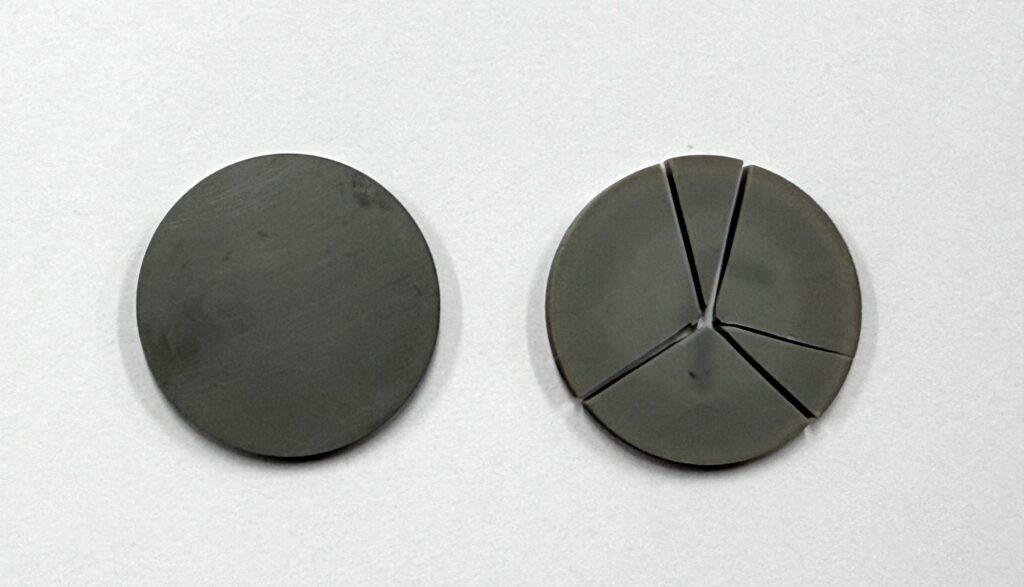
Silicon nitride (Si₃N₄) is an advanced structural ceramic recognised for its high mechanical strength, excellent thermal shock resistance, and ability to retain its structural properties at elevated temperatures. Sialons, meanwhile, are specialised silicon nitride alloys in which aluminium and oxygen partially replace silicon and nitrogen within the crystal structure. This controlled substitution improves chemical stability and allows material properties to be tailored for intensive industrial applications.
Both silicon nitride and Sialons demonstrate exceptionally low mechanical creep under sustained loading, producing virtually no permanent strain or dimensional change throughout extended operating periods.
Different grades of these advanced ceramics are engineered for specific service conditions:
- Beta-Sialons (including Syalon 101)- combine excellent thermal shock resistance with outstanding resistance to mechanical creep under continuous thermal and mechanical loading up to approximately 1200°C.
- Alpha-Sialons (including Syalon 050 and Syalon 201)- feature exceptionally hard crystal structures and highly refractory intergranular phases designed to resist mechanical creep under heavy loads at temperatures exceeding 1300°C and reaching approximately 1450°C in applications like heat treatment and metal casting.
Selecting the right ceramic grade ensures engineers can preserve dimensional accuracy, retain process stability, and achieve predictable long-term performance in severe operating environments.
Where Mechanical Creep Resistance Delivers Value
Mechanical creep resistance becomes vital whenever components must preserve their geometry during prolonged exposure to heat and continuous loading.
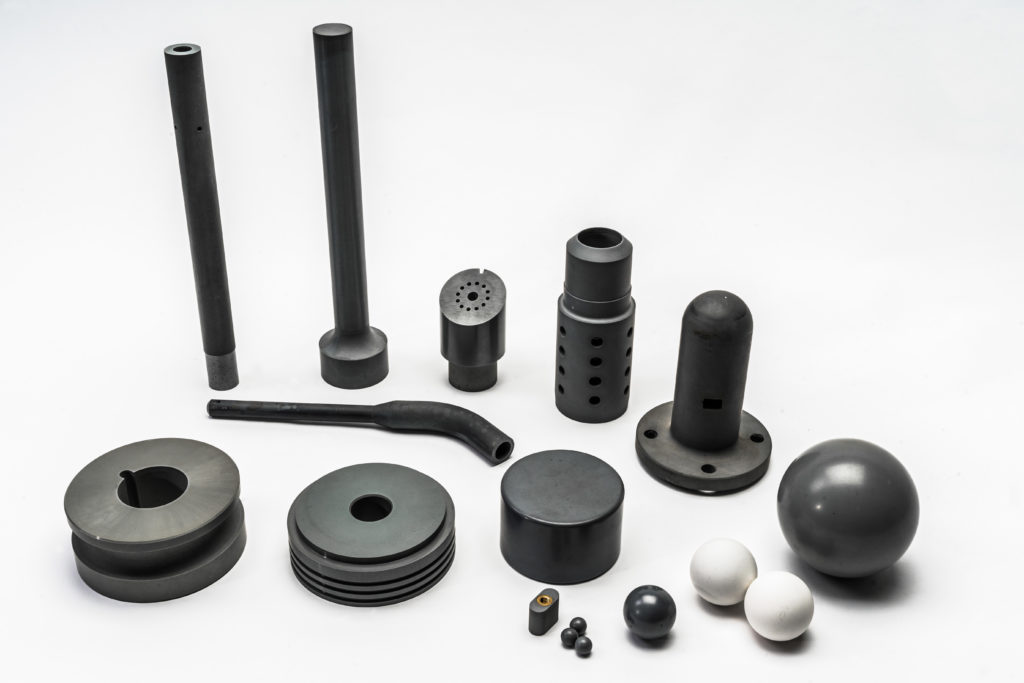
Precision engineered ceramics are widely used in:
- Extrusion dies for aluminium processing
- Thermocouple protection sheaths for heat treatment furnaces
- Molten aluminium riser tubes
- Immersion heater tubes
- Weld location pins for automated fabrication
- Hot wear components operating inside continuous casting equipment.
Advanced ceramics can maintain dimensional stability across thousands of operating hours, and thus help preserve machine alignment, reduce maintenance intervals, extend component life, and minimise costly production interruptions.
Advanced Ceramic Solutions from International Syalons
International Syalons develops advanced silicon nitride and Syalon materials that combine exceptional creep resistance with outstanding thermal shock resistance, wear resistance, and mechanical strength. Grades including Syalon 101, Syalon 050, and Syalon 201 are manufactured into high-performance components such as thermocouple protection tubes, riser tubes, heater tubes, weld location pins, and extrusion dies, ensuring engineers can retain dimensional stability and extend component life across critical industrial processes. To discuss the most suitable ceramic material for your application, contact the team at International Syalons now.