Cross-contamination poses a constant challenge to industries where purity and consistency are critical, such as food processing, pharmaceutical packaging, polymer extrusion, and medical device manufacturing. Residues, microbial growth, or wear particles from one production run can compromise the next, risking product quality, regulatory compliance, and costly downtime. Because cross-contamination often stems from the condition of the tooling, attention naturally turns to the forming dies used in many hygiene-critical processes. Their precision and surface integrity determine the level of clean, reliable operation that can be sustained between production runs.
One of the most effective ways to reduce the risks of cross-contamination is through using ultra-hard, wear-resistant ceramic extrusion dies. Conventional complex extrusion dies are usually manufactured using Electrical Discharge Machining (EDM) or electrically conductive materials such as tool steel or tungsten carbide, whilst most advanced ceramics are electrically insulating, and therefore not suitable for EDM. However, advanced silicon nitride-based ceramics such as Syalon 501 are electrically conductive, a property that enables manufacturers to use EDM to produce high-precision extrusion dies with complex internal geometries and improve protection against cross-contamination in hygiene-critical settings.
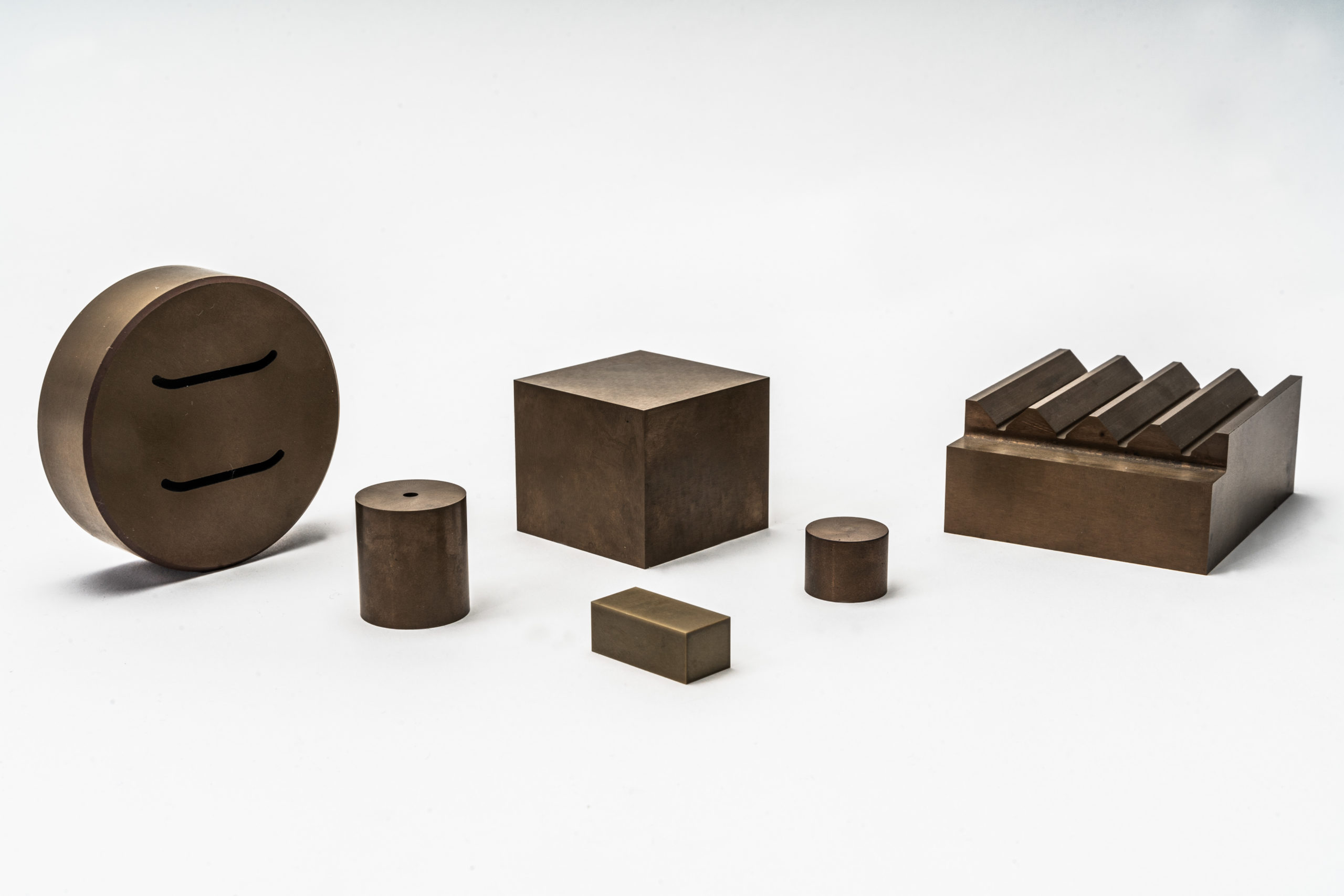
Syalon 501 ceramic components – Image Credit: International Syalons (Newcastle) Ltd.
Understanding EDM and EDM-Machined Dies
EDM, often referred to as wire erosion or spark erosion, is a non-contact process that shapes electrically conductive materials using rapid, controlled sparks between an electrode and the workpiece. Since no cutting force is applied, EDM can machine extremely hard or pre-hardened materials with remarkable accuracy.
Wire EDM enables the formation of complex profiles and fine internal corners, while sinker EDM is well suited to producing deep cavities and integrity moulds. These capabilities make EDM central to tool and die manufacturing, particularly in applications where conventional machining struggles to maintain precision or surface definition.
However, even though EDM performs well on hardened steels and alloys, the best metal dies can still wear, corrode or chemically react with process materials, generating surface changes that trap residues and increase the risk of cross-contamination. Over time, this kind of degradation can also compromise dimensional stability and process reliability.
Electrically conductive advanced ceramics, like Syalon 501, can overcome the limitations of metal dies through their inherent wear resistance, chemical inertness, and long-term dimensional stability. Syalon 501 is suitable for EDM, so manufacturers can produce EDM-machined dies with highly stable, non-reactive surfaces and precisely defined geometries, characteristics generated by shaping the forming surfaces directly with controlled electrical discharges. Such attributes directly support reliable cleaning, predictable forming performance, and lower cross-contamination risk in hygiene-critical processes.
Why Cross-Contamination Control Depends on Tool Surface Integrity
Every microscopic imperfection on a die’s contact surface is a potential contamination trap. Pits, scratches, or sharp internal corners can hold residue from a previous batch, and worn surfaces can release fine particles into the next production run. In regulated sectors such as food and pharmaceuticals, hygiene standards require tooling that is cleanable, inspectable, and stable over repeated cycles. Dies must resist both physical and chemical degradation and maintain consistent geometry to ensure cleaning procedures and inspections remain reliable over time, which is where EDM-machined dies provide a clear advantage.
How EDM-Machined Dies Help Prevent Cross-Contamination
1. Fewer Crevices and A More Controlled Geometry
EDM enables precisely defined geometries in the die cavity with minimal unintended recesses. By eliminating sharp corners, undercuts, and micro-crevices where residue might collect, EDM-machined dies reduce areas that are difficult to clean. This helps limit material build-up between production runs and lowers the risk of cross-contamination.
2. Dimensional Consistency for Reliable Validation
The exceptional dimensional accuracy achieved through EDM ensures each die maintains consistent geometry even after repeated use. Such stability ensures that cleaning and inspection processes can be validated with confidence, as the same surfaces and tolerances can be sustained over time. Predictable die geometry simplifies hygiene verification and supports regulatory compliance.
3. Durable, Wear-Resistant Tooling
Hardened materials can be machined through EDM without any need for softening. The resulting EDM-machined dies resist abrasion and corrosion, preventing surface deterioration that could eventually generate contamination particles.
4. Faster, Safer Product Changeovers
EDM-machined dies have smooth and stable geometries that allow quicker cleaning between materials or product types, such as allergenic and non-allergenic batches. Faster batch changeovers can reduce downtime and overall contamination risk.
5. Easier Validation and Auditing
An EDM-machined die offers a predictable, uniform surface that makes inspection and hygiene validation more straightforward, strengthening regulatory compliance and supporting robust quality assurance while helping minimise cross-contamination.
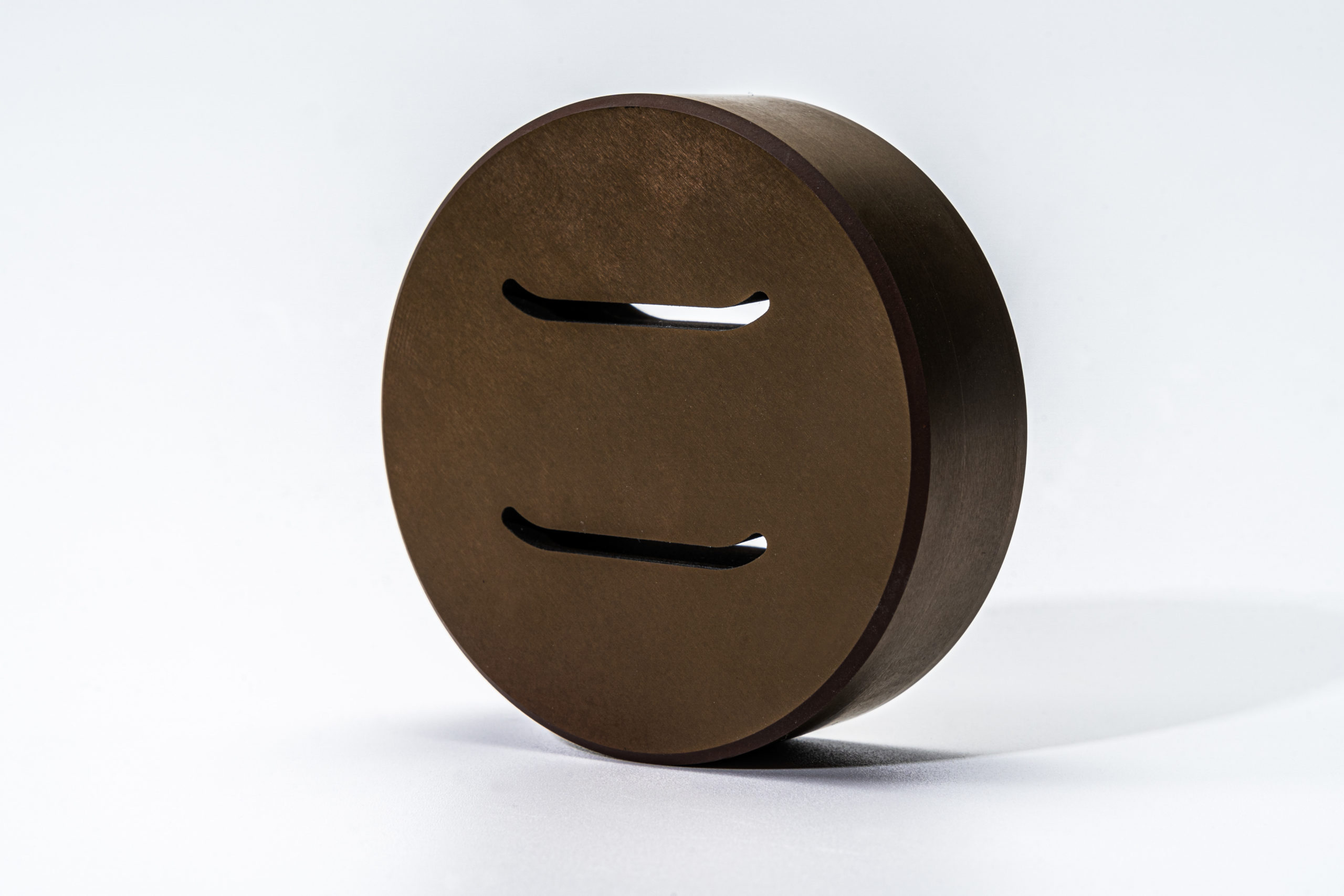
Electrically conductive ceramic extrusion die – Image Credit: International Syalons (Newcastle) Ltd.
Syalon 501: A Conductive Ceramic Engineered for Clean Precision
Among advanced ceramic materials, Syalon 501 stands out for its distinct properties. It is an electrically conductive silicon nitride-based composite designed specifically for EDM machining. At room temperature, its conductivity allows precise cutting by EDM, but at elevated service temperatures of up to around 700°C, conductivity is no longer required. The material then behaves as a technical ceramic with exceptional hardness, wear resistance, and thermal stability.
Syalon 501’s combination of characteristics offers major benefits for contamination control. The ceramic’s non-reactive surface resists chemical attack, while its low adhesion and fine geometry reduce the retention of residues and simplify cleaning. Its extreme hardness also limits surface wear, helping prevent particle release from the die during production.
For the best results, Syalon 501 EDM-machined dies should be manufactured from a blank with a pre-machined pilot hole, as the ceramic does not easily allow the EDM wire to plunge directly through. Because Syalon 501 is a specialist material, EDM parameters such as power settings and cutting speeds must be carefully refined to achieve the desired accuracy and integrity. The outcome is a robust, dimensionally stable EDM-machined die that performs reliably and helps reduce cross-contamination in hygiene-sensitive environments.
Contamination Control with Syalon 501
EDM-machined dies offer an effective way of preventing cross-contamination by combining precision manufacturing with hygienic design. When produced using Syalon 501, manufacturers gain the accuracy of EDM and the chemical stability and hardness of advanced ceramics. To learn more about Syalon 501 or to discuss your specific application requirements, contact International Syalons for expert technical advice and tailored material recommendations.