Low-pressure die casting (LPDC) is a controlled manufacturing method used to produce lightweight, high-strength aluminium car parts including wheels, engine blocks, and suspension components. The process works by applying low air pressure to move molten aluminium from a sealed holding furnace into a steel mold, allowing for accurate filling and minimal porosity. Central to this system is the riser tube, which ensures a clean, steady transfer of metal from furnace to mold. Sialon riser tubes, made from silicon nitride-based ceramics, are particularly well suited to the demands of low-pressure die casting thanks to their resistance to heat, corrosion, and mechanical wear. These properties help maintain stable casting conditions and consistent part quality across production cycles.
What Are Sialon Riser Tubes?
Sialon riser tubes are precision-engineered ceramic components developed for the demanding conditions of molten aluminium handling. They’re made from a modified form of silicon nitride that incorporates aluminium and oxygen, producing a material that performs exceptionally well where conventional options, like cast iron, often fall short. With LPDC, the sialon riser tube serves as the main passage through which molten metal travels from the furnace to the mold.
What makes sialon riser tubes especially effective is their combination of thermal shock resistance, chemical durability, and non-stick surface behavior. This set of properties prevents metal adhesion and maintains a smooth flow path throughout the casting cycle. As a result, the risk of defects is minimised, while part quality and process consistency are significantly improved. Their ability to hold up under extreme conditions makes them a valuable asset in high-volume automotive casting environments.

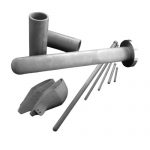
Silicon nitride heater and thermocouple protection tubes. Image Credit: International Syalons (Newcastle) Ltd.
How Sialon Riser Tubes Work in Low-Pressure Die Casting of Aluminium Car Parts
Molten aluminium must move cleanly and precisely during LPDC to produce high-quality car parts. Sialon riser tubes make this possible by forming a sealed pathway between the holding furnace and the mold. As low air pressure is applied, aluminium is pushed upward through the tube and into the die cavity. The tube’s ceramic surface resists chemical attack and prevents metal from sticking. These attributes keep the flow path clear and reduce the risk of oxide formation or contamination.
This casting method is used to produce:
- Wheels and rims
- Suspension arms
- Transmission housings
- Engine blocks
- Chassis components.
What Makes Sialon Riser Tubes Ideal for Low-Pressure Die Casting of Car Parts
Sialon riser tubes offer a practical solution to many of the common problems encountered in LPDC. Their performance advantages directly translate into cleaner castings, fewer defects, and greater operational reliability across demanding automotive production lines.
Engineered to Withstand Harsh Casting Temperatures
In LPDC, riser tubes face constant cycling between ambient air and molten aluminium, which places them under intense thermal stress. Sialon riser tubes are built to endure such extreme temperature changes without cracking. Consequently, they can deliver reliable performance across thousands of casting cycles in automotive foundries.
Compatible with Reactive Automotive Alloys
Certain aluminium alloys, such as AlSi10Mg, contain reactive elements like magnesium and silicon that can corrode traditional riser tube materials like cast iron. As sialon riser tubes are chemically inert, they can resist corrosion caused by these additives, helping prevent contamination and extending component life within LPDC systems.
Keep Metal Flow Paths Clear
Oxide buildup and dross can disrupt metal flow and affect casting quality. The non-wetting interior of sialon riser tubes prevents aluminium from sticking, which keeps the channel clean and promotes consistent filling of molds for parts like engine blocks and suspension arms.
Reliable Performance Under Casting Pressure
Sialon riser tubes retain their mechanical strength and shape even at the elevated temperatures and pressures typical of molten aluminium handling. This stability helps ensure continuous casting without deformation, especially when producing components that demand tight tolerances and smooth surface finishes.
Support Uniform Mold Filling in Automotive Casting
Uniform metal flow is essential for casting high-quality car parts. Because sialon riser tubes resist thermal expansion and wear, they maintain precise internal geometry, which in turn reduces porosity and helps achieve the dimensional accuracy needed for wheels, transmission housings, and chassis structures.
Reduce Downtime with Longer Service Life
Conventional riser tubes made from materials like aluminium titanate or cast iron often degrade quickly under repeated thermal cycling and chemical exposure. Frequent replacements in high-throughput LPDC operations can cause unplanned maintenance and production delays. Sialon riser tubes, by contrast, offer significantly longer service life, keeping operations more efficient.
Enable Cleaner Castings with Improved Surface Quality
Erosion and chemical reactions between molten metal and the riser tube can introduce inclusions and surface flaws in cast parts. The non-reactive nature of sialon riser tubes maintains a clean melt path, producing components with smoother finishes and fewer defects. This is critical for parts such as wheel hubs and engine casings.
The Right Sialon Riser Tube Can Determine Casting Quality
LPDC of aluminium car parts requires materials that deliver clean metal flow and maintain stability across repeated casting cycles. International Syalons manufactures advanced sialon riser tubes designed specifically for these conditions. Our products help improve casting consistency, reduce defects, and extend operational life across demanding production environments. For guidance on selecting the best sialon riser tube, speak with our team for expert advice and product-specific support.